
Salesforce Agile Scrum Project Management
Agile concepts
Agile Methodologies – Scrum
Sprints are a set of fixed-length iterations used to build the product.
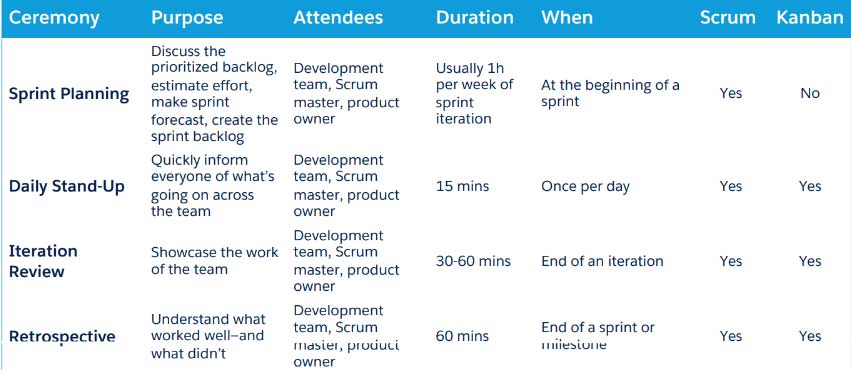
Each sprint has a structure thanks to four ceremonies:
- Sprint planning: a team gathering to decide on the scope of the upcoming sprint
- Sprint demo: a sharing session when the team presents the work they have produced in that sprint;
- Daily stand-up (Scrum): a 15-minute mini-meeting for the software team to coordinate
- Sprint Retrospective: An analysis of what worked and what didn’t, along with suggestions for improving the following sprint
Agile Methodologies – Scrum Roles
Product owners are advocates for their products, have a thorough understanding of the industry, work closely with development team members and business executives, define the roadmap, and set priorities for the backlog.
Scrum Master: Support Scrum among team members; coach the team, product owner, and business executives on the Scrum process; seek to improve Scrum practice; plan the necessary people and logistical resources for the development team’s stand-up, sprint review, sprint retrospective, and sprint planning; address any obstacles or diversions.
The Scrum Development Team is a small team of five to seven people who champion sustainable development practices. They cross-train each other and have varying skill sets. They set the agenda for each sprint by estimating how much work they think they can finish in the iteration using their historical velocity as a guide.
Scrum Versus Kanban
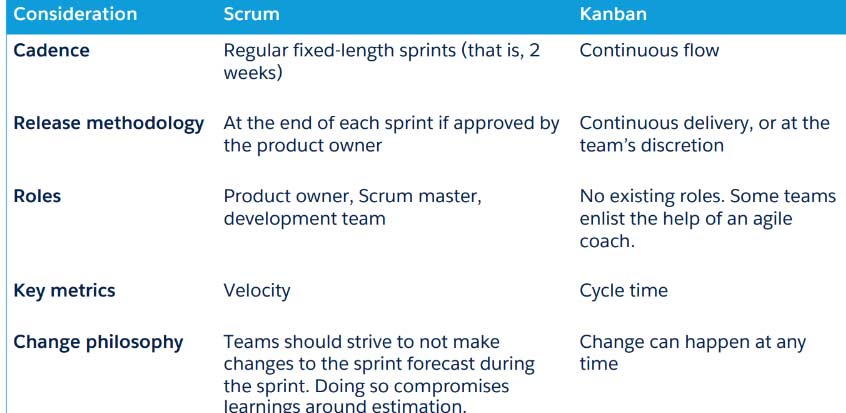
Agile Ceremonies in Scrum and Kanban